Office of the Provost
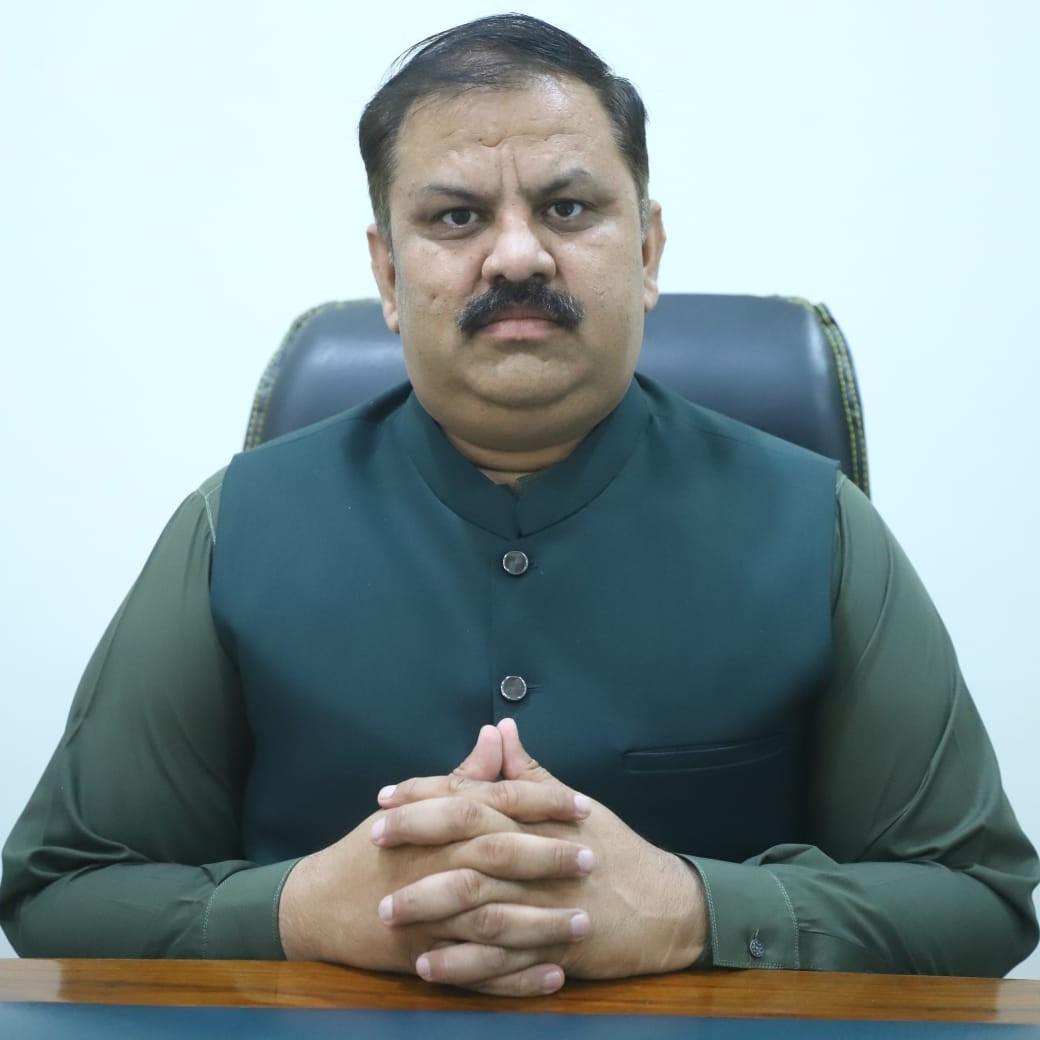
Dr. Muhammad Bilal Tahir
Provost
Director, Institute of Physics
Director, Quality Enhancement Cell
Email : m.bilaltahir@kfueit.edu.pk
Biography
Dr. Muhammad Bilal Tahir is a distinguished academic leader, accomplished researcher, and innovation-driven institutional strategist, currently serving as Provost at Khwaja Fareed University of Engineering and Information Technology (KFUEIT), Pakistan, alongside his leadership roles as Director, Institute of Physics, and Director, Quality Enhancement Cell. With extensive experience in higher education governance, academic administration, institutional strategic planning, financial stewardship, and quality assurance, he has contributed significantly to strengthening academic excellence, regulatory compliance, institutional performance, and sustainable university development.
An internationally recognized researcher in Materials Science, Nanotechnology, and Sustainable Energy Technologies, Dr. Tahir has authored hundreds of research publications and national/international authored/edited books, contributing to advanced functional materials, energy storage and conversion, computational materials science, and emerging technological innovations. His scholarly achievements include recognition among the world's top scientists, alongside contributions to intellectual property development, research commercialization, and interdisciplinary collaboration.
Beyond research, his leadership encompasses institutional transformation, resource optimization, research capacity building, international partnerships, industry–academia engagement, skills development, and youth empowerment. Committed to translating knowledge into measurable economic and societal value, Dr. Tahir advocates innovation-led growth, accountable governance, financial sustainability, and impact-oriented higher education, integrating academic excellence with technological advancement and community development.
Message from the Provost
One University. One Vision. One Agenda.
Excellence in Education | Innovation in Research | Integrity in Governance | Impact on Society
At Khwaja Fareed University of Engineering and Information Technology (KFUEIT), I firmly believe that the true strength of a university lies not merely in the degrees it awards, the research it publishes, or the rankings it achieves, but in its ability to transform lives, generate knowledge, inspire innovation, and contribute meaningfully to regional and national development.
My vision is to advance KFUEIT as a future-ready, student-centered, research-intensive, innovation-driven, and socially responsible university, where academic excellence is translated into measurable outcomes and institutional progress is guided by a shared sense of purpose.
Central to this vision is the philosophy of “One University, One Vision, One Agenda”—a commitment to institutional unity, collective ownership, transparent governance, academic integrity, and shared accountability. Our collective success must transcend individual departments, administrative boundaries, and personal interests. Every academic and administrative initiative should contribute to one overarching objective: the sustainable growth, global competitiveness, and societal relevance of KFUEIT.
The future of higher education demands a fundamental shift from traditional content delivery to Outcome-Based Education (OBE) and student-centered learning. Our responsibility is not simply to teach students what to think, but to develop their capacity to think critically, analyze complex challenges, evaluate evidence, create innovative solutions, and become lifelong learners. Guided by Bloom’s Taxonomy, we must progressively advance learning from remembering and understanding to applying, analyzing, evaluating, and creating. Through experiential learning, interdisciplinary education, problem-based instruction, digital competencies, and authentic assessment, we aspire to develop graduates who possess not only academic qualifications but also higher-order cognitive skills, professional competence, ethical judgment, creativity, adaptability, and entrepreneurial mindsets.
Research must move beyond publication counts toward meaningful scientific, technological, economic, and societal contributions. I envision a research ecosystem where fundamental discoveries inspire applied solutions, interdisciplinary collaboration addresses real-world challenges, and innovative ideas evolve into patents, prototypes, startups, industrial partnerships, and commercially viable technologies.
Our ambition is to strengthen the connection between education, research, innovation, entrepreneurship, and industry, enabling KFUEIT to become a catalyst for knowledge-based economic development, technological self-reliance, and sustainable progress.
A progressive university requires more than effective administration; it demands visionary leadership, evidence-based decision-making, financial prudence, transparent processes, institutional accountability, and a culture of continuous improvement.
I remain committed to strengthening quality assurance, accreditation readiness, strategic resource allocation, institutional effectiveness, and financial sustainability. Our approach must prioritize measurable performance, responsible stewardship of public resources, digital transformation, and outcomes that deliver genuine value to students, faculty, stakeholders, and society.
From University Boundaries to Societal Transformation
Universities must serve as engines of social mobility, community empowerment, and regional economic transformation. Through industry engagement, skills development, entrepreneurship, community outreach, and strategic national and international collaborations, KFUEIT must connect academic knowledge with the evolving needs of society.
We must nurture graduates who are not merely job seekers but problem solvers, innovators, entrepreneurs, responsible citizens, and future leaders capable of contributing to Pakistan's sustainable development and global competitiveness.
I envision a KFUEIT where every student is empowered, every faculty member is inspired, every employee is valued, every resource is responsibly utilized, and every achievement contributes to a larger institutional purpose.
Our success will ultimately be measured not only by what we teach, publish, or build, but by what our graduates can accomplish, what our research can transform, and what positive difference our university can make in society.
Together, let us build an institution defined not merely by its achievements, but by its enduring impact.
One University. One Vision. One Agenda.
From Knowledge to Competence. From Research to Innovation. From Excellence to Impact.
Dr. Muhammad Bilal Tahir
Provost
Khwaja Fareed University of Engineering and Information Technology (KFUEIT)
Rahim Yar Khan, Pakistan